
"Doctor, I think something isn't working in me." It's one of the phrases I hear most from women who come in because they struggle to reach orgasm. They arrive with a mix of frustration, shame, and often the feeling of being "broken" or a rare case.
I want to start by dismantling that idea: you are not broken, you are not strange, and in the vast majority of cases your body is perfectly healthy. Anorgasmia is one of the most common reasons for consultation in female sexology; it's well studied and, above all, it has a solution. In this article I explain, clearly and without taboos, why it happens and what can be done.
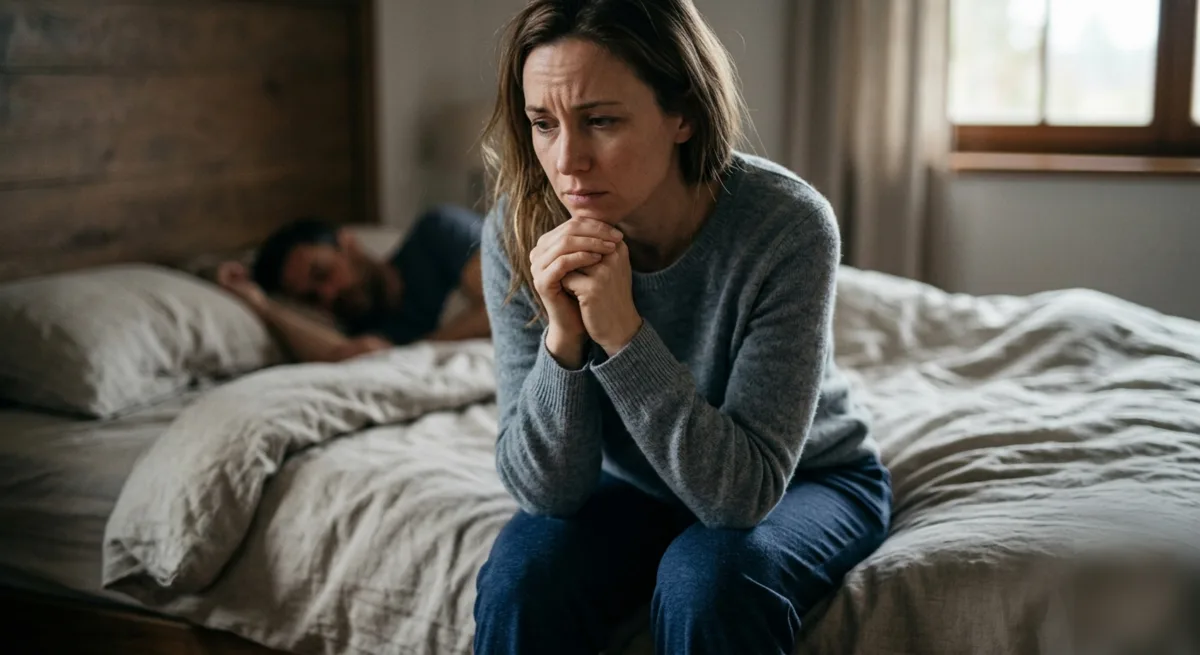
What is anorgasmia?
We speak of anorgasmia when there is a persistent difficulty reaching orgasm, or it doesn't come at all, despite the presence of desire, arousal, and adequate stimulation, and this causes distress or frustration.
Two important nuances in that definition:
- It's not the same as a lack of desire or pleasure. A woman can fully enjoy the encounter, become aroused, and lubricate, and still have difficulty reaching climax. They are different things.
- It's defined by distress. If you're at peace with how you live your sexuality, there's nothing to "fix." We speak of anorgasmia when that difficulty bothers you, frustrates you, or affects your relationship.
Types worth distinguishing
Telling them apart helps to understand what's happening:
- Primary: an orgasm has never been experienced, by any means. It usually has a lot to do with not knowing one's own body and with how one learned (or didn't learn) to experience sexuality.
- Secondary: orgasm used to be reached and now it's difficult or doesn't happen. Here there's almost always a trigger to look for: stress, a change in the relationship, grief, or starting a new medication.
- Situational: orgasm is reached in certain situations (for example, alone) but not in others (for example, with a partner). Far from being a flaw, this is an extremely valuable clue: it confirms that the body works and that the work lies elsewhere.
The misunderstanding at the center of almost everything
If I had to point to one cause above all the others, it would be this: the enormous cultural pressure that orgasm "should" come from penetration alone. For most women, that's not how it works.
The anatomical reality is that the vast majority need clitoral stimulation to reach orgasm, and penetration on its own often doesn't provide it. In other words: in a great many cases there is no dysfunction at all, but rather stimulation that doesn't match how the female body works. Understanding this completely changes the conversation.
Why does it happen? The real causes
As with almost all of sexuality, several factors usually combine. And here it's worth being clear: in most cases the causes are psychological, educational, and relational, far more than organic.
Psychological and educational factors (the most common)
- Not knowing one's own body and what kind of stimulation is needed.
- A restrictive upbringing or one loaded with guilt around pleasure.
- Performance anxiety: being so focused on "getting there" that letting go becomes impossible.
- Stress, fatigue, or worries that block the connection with pleasure.
- A history of negative or traumatic sexual experiences.
Relationship factors
- Lack of communication about what feels good and what is needed.
- Insufficient stimulation, or stimulation too centered on penetration.
- Tension or emotional distance in the relationship.
Medical factors (less common, but worth ruling out)
- Some medications, especially certain antidepressants.
- Hormonal changes (postpartum, breastfeeding, menopause).
- Pain during intercourse, which blocks the sexual response.
- Certain neurological or gynecological conditions.
Three myths worth dismantling
Myth 1: "If I don't come from penetration, something is wrong with me."
False. It's the most common thing and it has to do with anatomy, not with a flaw. Most women need clitoral stimulation.
Myth 2: "It's frigidity / I'm just not a sexual person."
"Frigidity" is an old, imprecise, judgment-laden term that's best left behind. Difficulty reaching orgasm says nothing about your capacity to desire or to enjoy.
Myth 3: "It's my partner's job to make me come."
Pleasure is a shared construction, but also a very personal one. Knowing your own body and being able to communicate it is part of the solution, and that gives you back the leading role rather than taking it from anyone.
How it's treated (and why it really works)
The good news is that anorgasmia responds very well to treatment, especially when the cause is—as it usually is—psychological or educational. The plan is tailored to each person and may include:
1. Sex education and self-knowledge
Understanding how your own body works and what kind of stimulation you need is often 80% of the path. It includes guided self-exploration exercises, without pressure and without the goal fixed on "the result."
2. Reducing pressure about the result
Paradoxically, chasing orgasm pushes it away. Part of the work is relearning to enjoy pleasure for its own sake. Sensate focus techniques are very useful here.
3. Couple work and communication
When there's a partner, learning to communicate desires and needs—and to broaden the repertoire beyond penetration—is often decisive.
4. Addressing the medical side, when relevant
If a medication, a hormonal change, or pain is involved, it's evaluated and adjusted. A treatment is never stopped or changed on your own: it's assessed in consultation.
5. Working through the emotional side
When there's guilt, anxiety, or difficult experiences in the background, working through them in a safe space frees up the sexual response.
When should you seek help?
I recommend seeking a professional evaluation if:
- You've never reached orgasm and would like to be able to experience it.
- You used to reach it and now it's difficult or doesn't happen.
- It causes you frustration or sadness, or you avoid intimacy because of it.
- It's affecting your relationship or how you feel about yourself.
You don't have to resign yourself or "fake it." It's an absolutely legitimate and common reason for consultation, and working on it often opens the door to a much fuller sex life.
One final thought
Your sexuality is not an exam you pass or fail with an orgasm. Coming in for this doesn't mean you're failing: it means you're choosing to know yourself better and to take care of an important part of your wellbeing.
Does any of this sound familiar?
We can look at it together, in a confidential and judgment-free space, and design a plan tailored to you.
Message me on WhatsAppThis article is for informational and educational purposes and does not replace an individual medical consultation. Each case requires professional evaluation.